
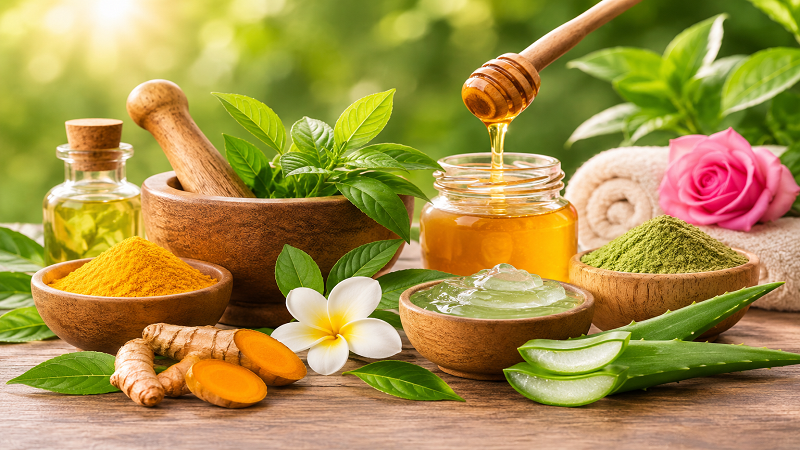
Walk into almost any Indian household and you will find a few trusted ingredients in the kitchen or on the bathroom shelf: a bottle of oil for weekend head massages, a little rose water for hot afternoons, a paste or two for the skin. These habits have been passed down through generations. They are now getting fresh attention from people who want shorter ingredient lists and simpler routines.
This guide looks at two of those ingredients, coconut oil and rose water, and at how natural Ayurvedic ingredients can fit into a modern daily routine without turning self-care into a chore. It also covers how to choose quality products and use them sensibly.
Why Natural Ingredients Are Becoming Part of Everyday Self-Care
Traditional Indian personal care has always leaned on what was close at hand: plant oils, floral waters, herbs and household staples. Ayurveda, the traditional Indian system of wellbeing, treats daily routines as a foundation of balance. Oil massage, simple cleansing and seasonal habits are all part of that thinking. These are traditional practices rather than clinically established treatments, and it is worth keeping that distinction in mind.
Several things explain the renewed interest:
- Ingredient transparency. More people read labels and prefer to know exactly what goes on their skin and hair.
- Simplicity. A routine of two or three well-chosen products is easier to keep up than a crowded shelf.
- Personalisation. Skin and hair differ from person to person, and from season to season. Many readers prefer to pick ingredients that suit their own needs rather than follow a trend.
Natural does not automatically mean suitable for everyone, though. Plant-based ingredients can still irritate sensitive skin, so a patch test (applying a small amount to the inner forearm and waiting 24 hours) is a sensible first step with any new product.
Cold-Pressed Coconut Oil: A Traditional Ingredient for Hair and Skin Care
Coconut oil has a long history across coastal India, where it has been used for cooking, hair oiling and skin care for generations.
What “cold-pressed” means
Cold-pressed oil is extracted by mechanical pressing at relatively low temperatures, without the high heat or chemical solvents often used in industrial refining. Refined oils are typically processed further to produce a neutral smell and a longer shelf life. Cold-pressed oils tend to retain more of the natural aroma and character of the coconut. Many people choose them for exactly that reason, though how a given oil is made always depends on the producer.
Traditional hair oiling
Hair oiling, often called champi in many Indian homes, is as much a ritual as a routine. A little warmed oil is worked into the scalp and lengths with gentle massage, left on for a while, then washed out. Many people value the practice for its calming effect and for the way it can leave hair feeling softer and easier to manage. If you are looking for cold pressed coconut oil for hair, this traditional method is a good starting point. Claims about hair growth are not well established, so it is best to treat oiling as a way to condition and care for hair rather than as a fix for hair loss.
Coconut oil for skin
Coconut oil is also used as a simple body moisturiser, especially for dry areas such as elbows, knees and heels. A small amount on slightly damp skin, such as after a bath, can help lock in moisture. Because coconut oil is rich, it may feel heavy on oily or acne-prone skin, so many people avoid applying it to the face. Check how your skin responds before making it a regular habit.
Practical tips
- Warm a small amount between your palms before applying. Heating it gently in a bowl of warm water also works. Avoid direct flame or microwave heat.
- Massage the scalp with your fingertips for a few minutes, then leave the oil on for 30 minutes to a few hours before shampooing.
- Start with a small quantity. You can always add more, and too much is harder to wash out.
Choosing quality coconut oil
Look for a clear description of how the oil is extracted, a short ingredient list (ideally just coconut) and sensible packaging. Products such as Cold Pressed Coconut Oil from traditional producers are typically made for versatile everyday use, from oil massage and hair care to skin moisturising and suitable cooking applications. In all cases, check the product page for the specific intended uses.
Gulab Jal: A Classic Rose Water for Everyday Skincare
If coconut oil is the traditional nourishing ingredient, rose water is the refreshing one.
What is Gulab Jal?
Gulab jal is the Hindi and Urdu name for rose water. In its traditional form it is made by steam distillation: rose petals are heated, the steam is collected and condensed, and the resulting fragrant water is bottled. It has long been used in Indian households for skincare, in cooling beverages and in sweets. For skincare, always use a product that is specifically intended for external use.
Rose water in traditional Indian skincare
Rose water appears in many traditional beauty practices, from face packs to cooling splashes during warm weather. It is valued for its light floral scent and refreshing feel. Many people use it as a gentle step after cleansing, although it is not a substitute for cleansing or sun protection.
Using rose water as a face toner
The simplest use is a toner. After washing your face, apply a little rose water with a clean cotton pad or mist it lightly over your face. A bottle of Gulab Jal made through steam distillation suits this kind of everyday refresh, and it can also be used to mist the face during the day for a cooling effect. If you are searching for rose water for face use, this is the most common and approachable routine.
Rose water with face packs
Rose water is often used to mix traditional face packs. Many people stir a little into a small amount of multani mitti (fuller’s earth) or sandalwood powder to make a smooth paste, apply it to clean skin for a short time, and rinse it off. Dry skin may find clay-based packs drying, so keep the time short and moisturise afterwards.
What to look for when choosing rose water
- Ingredients: Ideally just rose distillate and water, without added fragrance or unnecessary additives.
- Method: Steam-distilled rose water is the traditional standard.
- Intended use: Check that the product is labelled for skincare. Do not drink rose water that is sold for external use.
- Packaging: Dark glass or a well-sealed bottle helps preserve quality.
How to Include These Natural Ingredients in a Simple Daily Routine
A good routine is one you can actually keep up. Here is a simple way to combine both ingredients without overcomplicating things:
Morning: Cleanse your face, mist or dab on rose water, then apply your usual moisturiser and sunscreen.
Evening: Cleanse, tone with rose water, and use a light moisturiser suited to your skin type. If your skin is dry and tolerates it, a very small amount of coconut oil on the body, or on dry patches away from the face, can help.
Weekly: Set aside a little time for a scalp massage with warmed coconut oil. Wash it out thoroughly afterwards. Once a week, if it suits your skin, try a simple face pack mixed with rose water.
Introduce one new ingredient at a time. If something causes redness, itching or discomfort, stop using it and consult a dermatologist if the reaction persists.
Tips for Choosing Quality Natural Personal Care Products
Whatever the ingredients, a few habits make shopping easier.
- Check ingredient transparency. A good label lists everything in the bottle in plain terms. Be cautious of vague phrases such as “natural blend” with no detail.
- Understand the method. Cold-pressing, steam distillation and similar traditional methods are worth looking for, and a trustworthy brand explains them clearly.
- Look at packaging and storage. Oils and floral waters last longer in sealed, well-chosen containers kept away from direct sunlight and heat.
- Read the label for intended use. Products for external skincare, hair care or cooking are not interchangeable. Follow the directions given.
- Match the product to your needs. Skin type, hair type, climate and sensitivities all matter. What works for a friend may not suit you, so patch test and observe.
- Be realistic. Natural ingredients can be pleasant, supportive parts of a routine. They are not cures, and no product should be expected to deliver dramatic overnight results.
Conclusion
Traditional ingredients endure because they are simple, familiar and easy to build into daily life. Coconut oil offers a rich, nourishing option for hair and body, while rose water provides a light, refreshing step for the face. Together they show that thoughtful personal care does not need to be complicated.
Choose products with clear labels and honest descriptions, patch tests before use, and keep your routine manageable. The most effective habit is usually the one you enjoy and can maintain.